
 By Admin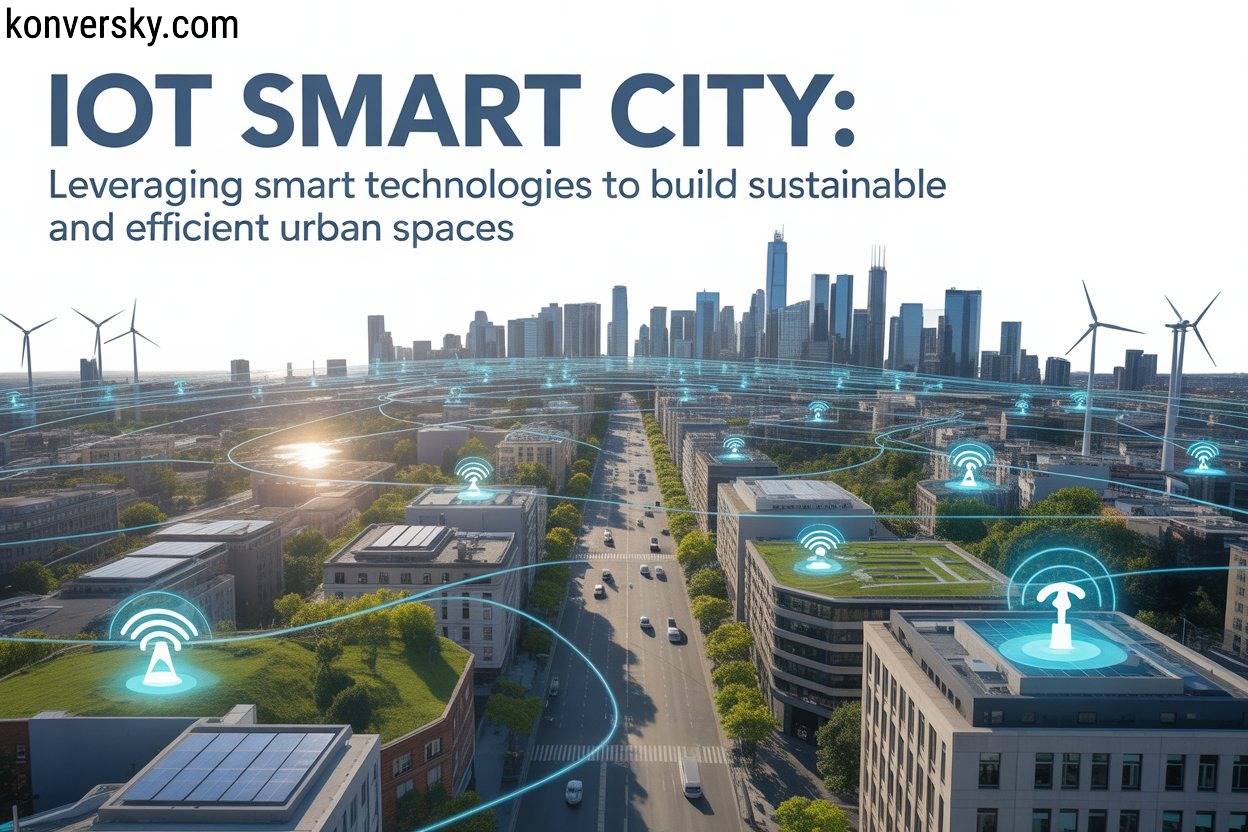
Introduction
The concept of the IoT smart city is transforming the way cities operate. IoT smart city initiatives rely on connected devices, sensors, and intelligent systems to monitor and manage urban infrastructure. These devices gather real-time data, helping city authorities make faster and more informed decisions. From traffic management to energy distribution, the IoT smart city provides practical solutions that improve daily urban life. Citizens experience smoother services, safer environments, and better overall convenience. Technology has become the backbone of IoT smart city development, allowing cities to respond to challenges in innovative ways. Urban areas face growing pressures as populations expand and resources become limited.
Traffic congestion, pollution, energy shortages, and inefficient waste management are common problems in many cities. At the same time, the demand for sustainable and efficient urban services is increasing. To tackle these challenges, cities are turning to IoT smart city solutions. IoT smart city technologies play a central role in making cities more sustainable and efficient. By monitoring environmental conditions, optimizing resource usage, and streamlining public services, connected systems help urban planners make data-driven decisions. These innovations not only reduce costs but also improve the quality of life for residents. Leveraging IoT smart city technologies provides clear benefits for both cities and citizens.
Smart transportation systems reduce traffic delays, intelligent energy grids conserve electricity, and connected waste management systems ensure cleaner neighborhoods. Public safety improves with real-time surveillance and emergency response systems. Furthermore, IoT smart city platforms allow cities to track patterns in urban activity to anticipate problems before they escalate. Sustainable planning powered by IoT smart city initiatives reduces environmental impact while ensuring efficient urban services. By embracing these technologies, cities can become cleaner, safer, and more responsive. Understanding the role of the IoT smart city highlights its importance in shaping the future of modern urban environments. It is no longer just a concept but a foundation for creating smart, efficient, and sustainable urban spaces.
What is an IoT Smart City?
An IoT smart city is an urban area that uses connected devices and intelligent systems to improve efficiency, sustainability, and quality of life. It relies on sensors, smart devices, and data networks to gather real-time information across multiple city functions. This data allows city authorities to monitor traffic patterns, energy consumption, environmental conditions, and public safety instantly. By analyzing these insights, cities can make faster, smarter decisions that improve services and reduce costs. Residents benefit from smoother transportation, cleaner streets, safer neighborhoods, and more responsive public services. Technology acts as the backbone of these modern urban environments, ensuring that cities can adapt to challenges efficiently.
The components of a smart city work together to create a cohesive, connected ecosystem. Sensors track movement, pollution levels, energy usage, and water supply. Connected devices communicate seamlessly with each other and with central control systems. Data networks transmit this information for analysis, enabling authorities to make evidence-based decisions. Together, these systems provide a foundation for smarter urban planning, better resource allocation, and improved citizen services. Each component plays a crucial role, from transportation management and energy distribution to environmental monitoring and emergency response. By integrating technology into all aspects of urban infrastructure, cities can function more smoothly and sustainably.
IoT technology also plays a key role in governance and public services. Smart transportation systems reduce congestion and optimize public transit schedules. Energy grids adjust automatically to balance supply and demand. Waste management becomes efficient with sensor-based collection systems. Public safety improves through real-time monitoring and faster emergency responses. City officials can predict potential issues before they escalate, leading to proactive problem-solving. Overall, IoT transforms cities into responsive, sustainable, and data-driven environments. By connecting devices, people, and services, IoT smart cities ensure that urban spaces are not only efficient but also safer, cleaner, and more livable for everyone. Understanding these systems highlights how technology is shaping the future of modern urban living.
Key Technologies Driving Smart Cities
Smart cities rely on advanced technologies to improve efficiency, sustainability, and quality of life. At the core are sensors and connected devices. These devices monitor traffic patterns, energy usage, air quality, water supply, and public safety in real time. They communicate continuously with central systems, forming a seamless network across the city. By collecting accurate information, authorities can respond quickly to issues, optimize urban operations, and improve services for residents. Connected devices form the backbone of a smart city, allowing seamless integration of multiple systems while supporting data-driven urban planning and decision-making. Data analytics and artificial intelligence are essential for making sense of collected information.
Analytics identify trends, detect anomalies, and predict potential problems before they escalate.AI helps optimize traffic lights, energy grids, and public services, improving overall efficiency. While AI is a supporting tool rather than the main focus, it significantly enhances decision-making capabilities. Cloud computing stores large volumes of data securely and allows centralized access. Edge computing processes data locally for faster response times, especially in time-sensitive applications like emergency services. They balance electricity supply and demand, integrate renewable sources, and reduce energy waste. By combining these technologies, cities can operate more efficiently while minimizing their environmental impact.
Real-time monitoring improves traffic flow, reduces energy consumption, and enhances public safety. Waste collection, water management, and other essential services become more efficient and responsive. City authorities gain actionable insights for planning, policy-making, and long-term infrastructure development. Residents enjoy cleaner streets, safer neighborhoods, and smoother city services. Overall, IoT-driven technologies transform cities into intelligent, sustainable, and responsive spaces. By leveraging sensors, analytics, cloud and edge computing, and smart energy systems, urban areas become smarter, greener, and more livable. These technologies ensure that cities can meet growing population demands, tackle environmental challenges, and provide a higher quality of life for all citizens.
Applications of IoT in Urban Spaces
IoT technologies are revolutionizing urban life by making cities smarter, safer, and more efficient. Smart traffic management systems use real-time data to reduce congestion and optimize traffic flow. Public transport schedules are adjusted dynamically, improving reliability and reducing wait times. Sensors detect incidents quickly, allowing rapid responses and minimizing delays. Connected devices provide accurate information to authorities, enabling smoother traffic operations. As a result, commuters spend less time on the road, fuel consumption decreases, and pollution levels are reduced. Energy management is another critical area where IoT has a major impact.
Intelligent energy grids monitor consumption and balance supply with demand efficiently. Renewable energy sources, such as solar and wind, are integrated seamlessly into the network. Smart buildings adjust lighting, heating, and cooling automatically based on real-time occupancy and usage patterns. These systems reduce energy waste, lower costs, and support sustainability goals. By using advanced monitoring and analytics, city authorities can make informed decisions about energy distribution. Residents benefit from more reliable services, and cities achieve better environmental outcomes. IoT also plays a vital role in public safety, waste management, environmental monitoring, and citizen services.
Smart surveillance systems monitor streets and public spaces continuously, while disaster management systems provide alerts for faster emergency responses. Smart waste bins track fill levels to ensure timely collection, and air quality sensors detect pollution spikes, helping authorities take proactive measures. Connected utilities and healthcare monitoring systems enhance convenience and efficiency for citizens. Overall, IoT creates a responsive urban ecosystem where transportation, energy, safety, waste, and citizen services work seamlessly together. Residents experience safer neighborhoods, cleaner environments, and higher quality of life, while authorities gain actionable insights to plan and optimize city operations effectively.
Benefits of IoT Smart Cities
IoT technologies provide numerous advantages that significantly improve urban life and city operations. One of the most important benefits is reduced energy consumption. Smart grids and connected devices continuously monitor electricity usage across homes, offices, and public infrastructure. Buildings automatically adjust lighting, heating, and cooling based on demand. Renewable energy sources, such as solar and wind, are integrated efficiently, reducing reliance on non-renewable sources. These systems lower energy waste, reduce costs, and minimize the city’s carbon footprint. Residents enjoy more reliable and sustainable energy services, while cities become greener and environmentally responsible. Over time, energy-efficient systems also support broader sustainability goals, helping cities combat climate change and achieve long-term ecological balance.
Transportation and traffic management also improve significantly with IoT technologies. Real-time monitoring helps detect congestion, accidents, and road hazards instantly. Traffic signals adjust automatically, while public transport schedules are optimized using predictive analytics. Commuters spend less time on the road, fuel consumption decreases, and air pollution is reduced. Authorities can respond faster to traffic incidents, ensuring safer streets and smoother traffic flow. Smart parking solutions help drivers find spaces quickly, reducing unnecessary driving. These improvements make urban mobility more efficient, convenient, and environmentally friendly. Residents benefit from faster commutes, safer roads, and reduced stress, while cities enjoy more organized traffic systems and lower emissions.
Public safety, emergency response, and overall quality of life also see significant gains. Smart surveillance monitors streets, public areas, and high-risk zones continuously. Emergency alert systems notify authorities immediately during accidents, natural disasters, or security incidents. Waste management becomes smarter with sensor-equipped bins, ensuring timely collection and cleaner neighborhoods. Air quality sensors detect pollution levels, allowing authorities to take proactive measures. Citizen services, including healthcare monitoring, connected utilities, and smart buildings, become more efficient and responsive. Residents experience cleaner streets, safer neighborhoods, and enhanced access to essential services. Authorities gain actionable insights for urban planning, resource allocation, and long-term decision-making. Together, these benefits transform cities into smarter, safer, more sustainable, and highly responsive urban spaces, improving daily life for residents while supporting future growth and development.
Challenges and Considerations
Implementing IoT in smart cities comes with several significant challenges. Installing sensors, connected devices, and smart grids requires substantial funding. Infrastructure upgrades and technology integration further increase overall costs. Smaller municipalities may struggle to finance large-scale projects. Despite these high initial expenses, long-term benefits such as energy savings, operational efficiency, and enhanced city services make these investments worthwhile. Careful planning, phased implementation, and prioritization of critical systems help manage financial pressures effectively. Data privacy and security remain major concerns for smart city initiatives.
IoT systems collect massive amounts of personal and operational data, from traffic patterns to energy usage and citizen information. Unauthorized access or cyberattacks could compromise sensitive data, causing serious consequences. Cities must implement strong cybersecurity measures, including encrypted networks, secure data storage, and strict access controls. Effective security ensures residents feel confident using smart services while city operations remain uninterrupted. Without these safeguards, even advanced IoT systems may fail to deliver their intended benefits. Integration with legacy infrastructure and citizen adoption present additional challenges.
Many existing urban systems are outdated and incompatible with modern IoT solutions. Retrofitting or replacing old infrastructure can be complex, time-consuming, and costly. At the same time, public awareness and acceptance play a crucial role in project success. Residents need to understand how smart technologies enhance daily life, public services, and sustainability. Public education campaigns, community engagement, and clear communication about privacy, security, and environmental benefits encourage adoption. By addressing financial, technical, security, and social challenges proactively, cities can successfully implement IoT solutions. This ensures safer, more efficient, and more sustainable urban environments that benefit both residents and authorities.
Future of IoT Smart Cities
The future of IoT smart cities promises remarkable improvements in urban living and city management. Predictive urban management is becoming a cornerstone of this transformation. Advanced sensors and connected devices can forecast traffic congestion, energy demand, and potential emergencies. Authorities can act before issues arise, reducing delays and minimizing resource waste. This proactive approach ensures smoother operations and better service delivery. By anticipating challenges, cities can save time, improve efficiency, and provide residents with a more reliable urban experience. Over time, predictive systems will allow cities to operate more intelligently, preventing problems before they impact citizens. Renewable energy integration is another major trend shaping the cities of tomorrow.
Solar panels, wind turbines, and other green energy sources connect seamlessly to smart grids. IoT systems monitor energy production and consumption in real time, optimizing distribution across homes, offices, and public infrastructure. Buildings automatically adjust lighting, heating, and cooling based on occupancy and activity patterns. These technologies reduce energy waste, lower costs, and enhance sustainability. By utilizing renewable energy effectively, cities can significantly cut carbon emissions, provide reliable power to residents, and create healthier urban environments. The combination of smart grids and renewable energy ensures cities remain environmentally responsible while supporting growth. Real-time urban analytics will further enhance decision-making and city efficiency.
Data from sensors, public services, and citizen feedback is analyzed instantly to optimize operations. Traffic management, waste collection, water supply, and public safety systems benefit from continuous monitoring and adjustment. Authorities gain actionable insights for planning, emergency response, and resource allocation. By combining predictive management, renewable energy, and real-time analytics, cities can evolve into fully sustainable, efficient, and intelligent ecosystems. Residents enjoy safer streets, cleaner environments, and better access to essential services. Overall, IoT technologies empower cities to face future challenges while improving quality of life, reducing environmental impact, and creating urban areas that are smarter, more responsive, and highly sustainable for all citizens.
Conclusion
IoT is fundamentally transforming how cities operate, making them more sustainable, efficient, and responsive. Connected devices, sensors, and intelligent systems constantly monitor energy usage, traffic patterns, and public services. This data allows authorities to make informed, real-time decisions that reduce waste, optimize resources, and lower operational costs. By integrating IoT into urban planning, cities can decrease carbon emissions, improve energy efficiency, and ensure more responsible and long-term sustainability. These innovations not only help city administrations but also promote environmentally friendly practices and smarter management of urban growth. The benefits of IoT extend directly to citizens, improving daily life and community well-being.
Residents enjoy safer streets, cleaner environments, and more reliable public services. Traffic flows more smoothly, reducing commute times and fuel consumption. Smart energy systems lower costs while maintaining consistent electricity supply. Waste management becomes efficient, and air quality monitoring ensures healthier living conditions. Healthcare, utilities, and emergency services operate faster and more effectively. Real-time urban analytics allow authorities to respond promptly to incidents, creating a secure and convenient environment. Overall, IoT contributes to a higher quality of life, making cities more livable, resilient, and capable of adapting to residents’ needs. Looking ahead, IoT opens vast possibilities for fully connected and intelligent urban ecosystems.
Predictive urban management, renewable energy integration, and real-time analytics will continue to evolve, enhancing efficiency, sustainability, and safety. Citizens will benefit from advanced infrastructure, optimized services, and safer neighborhoods. Authorities will gain powerful tools for planning, resource allocation, and emergency response. By realizing the full potential of IoT, cities can transform into adaptive, sustainable, and citizen-focused environments. The integration of technology with urban life allows cities to meet modern challenges effectively, reduce environmental impact, and create smarter, greener, and more responsive communities. Ultimately, IoT empowers cities to provide a better, more efficient, and sustainable urban experience for present and future generations.
SEO & Engagement Tips
Using keywords naturally is essential for both search engines and readers. Focus on phrases such as IoT smart city, smart technologies, sustainable urban spaces, and efficient urban management. Place these keywords strategically in titles, subheadings, and throughout the body text. Avoid overusing them, as keyword stuffing can reduce readability and negatively impact search rankings. Instead, integrate keywords seamlessly into sentences for a natural flow. Proper keyword usage ensures search engines understand the topic while keeping readers engaged. Keywords should support the content, not disrupt the reading experience, helping both visibility and user experience. Incorporating real-world examples significantly enhances engagement and builds credibility.
Highlight projects such as Singapore’s smart city initiatives or Barcelona’s smart traffic solutions. Explain how these projects optimize energy, transportation, and public services. Case studies make abstract concepts tangible and relatable. Adding statistics, measurable results, or key outcomes strengthens authority and trust. Readers are more likely to engage with content that demonstrates practical applications of IoT and smart technologies. Examples also help illustrate how sustainable urban spaces and efficient urban management can be achieved. Including visual references or links to these initiatives further enhances clarity and makes the content more actionable for readers. Improving readability and content structure is equally critical for SEO and audience retention.
Use subheadings to organize ideas clearly and guide readers through the content. Bullet points are highly effective for presenting key insights, statistics, or step-by-step recommendations. Short paragraphs make scanning easier and improve comprehension. Incorporate visual elements such as charts, tables, or images to engage readers visually and provide context. Transition words like “also,” “for example,” “in addition,” and “overall” ensure smooth flow between ideas. Well-structured, visually appealing articles keep readers on the page longer, reduce bounce rates, and improve search rankings. By combining natural keyword placement, real-world examples, clear formatting, and visual aids, your content becomes highly readable, engaging, and optimized for search engines. This approach ensures that both readers and search engines find value, maximizing reach, credibility, and overall effectiveness.