
 By Admin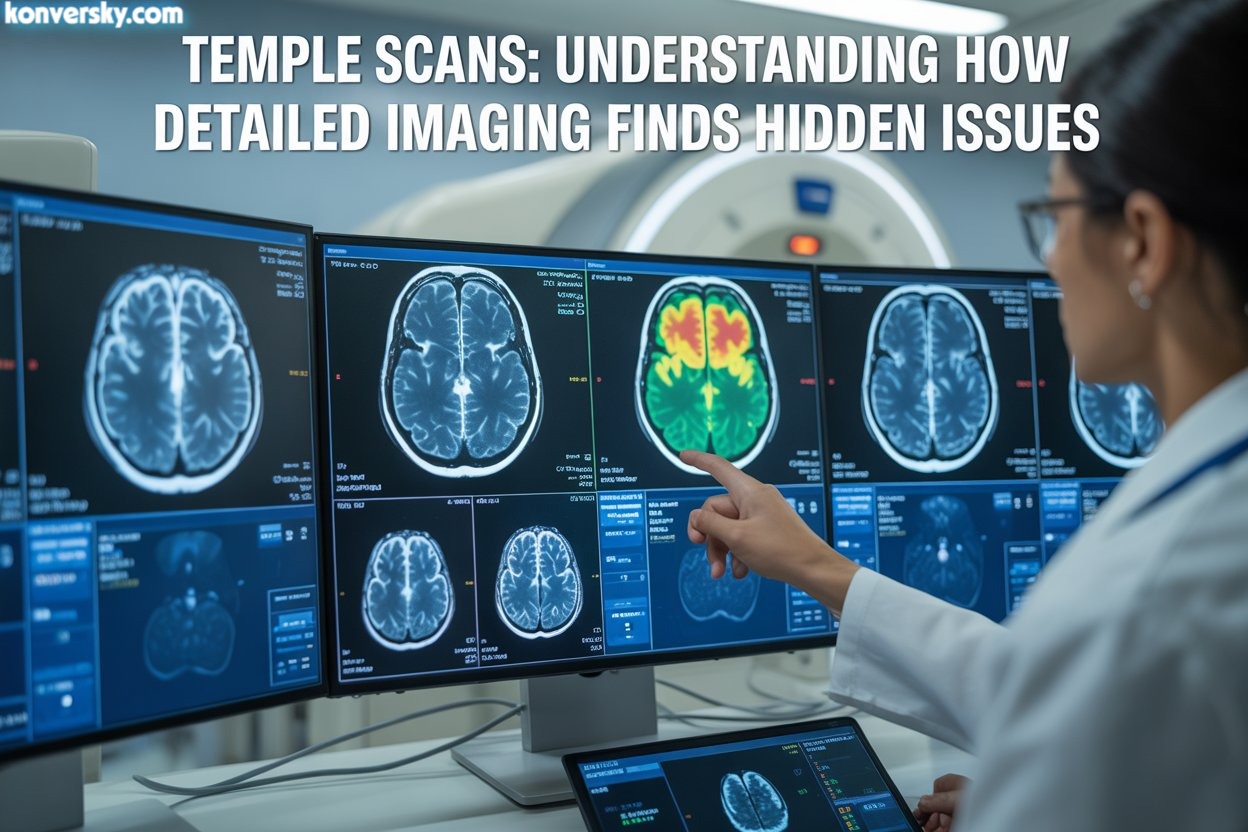
Introduction
Temple scans are specialized medical imaging tests that focus on the temple region of the head. They provide detailed images of bones, blood vessels, and soft tissues, allowing doctors to examine areas that are hard to assess through routine exams. These scans help detect hidden issues early, preventing serious complications. They are a vital tool in modern healthcare for evaluating unexplained head or temple discomfort.
Many people experience persistent headaches, dizziness, or sudden temple pain without knowing the underlying cause. Temple scans can uncover conditions such as vascular abnormalities, minor injuries, or structural changes that standard examinations might miss. Early detection allows doctors to provide timely treatment, improving recovery chances and avoiding further complications. Patients benefit from accurate diagnosis and targeted care, ensuring a safer and more effective treatment plan.
Research indicates that a significant portion of individuals with ongoing temple discomfort have underlying issues that go unnoticed without imaging. Modern scanning techniques are highly precise and provide a clear picture of hidden problems. Temple scans guide doctors in making informed decisions while offering patients reassurance. Understanding their importance encourages individuals to seek timely medical advice, leading to better health outcomes. These scans not only help treat problems early but also provide peace of mind, making them an essential part of head and temple health management.
What Are Temple Scans?
Temple scans are medical imaging tests that focus on the temple region of the head. They provide detailed views of bones, blood vessels, and soft tissues, helping doctors examine areas that routine exams cannot see clearly. These scans are important for detecting hidden issues, understanding the structure of the head, and identifying problems early. They play a key role in guiding timely treatment and ensuring better health outcomes for patients.
The most common types of temple scans include CT scans, MRI scans, and sometimes ultrasound. A CT scan uses X-rays to create clear cross-sectional images, which are especially useful for detecting fractures or bone abnormalities. MRI scans use magnetic fields and radio waves to provide highly detailed images of soft tissues, nerves, and blood vessels. Ultrasound is sometimes used to examine blood flow in the temple arteries, helping identify blockages or aneurysms that could cause complications.
Each type of temple scan highlights different structures. CT scans focus on bones, MRI scans reveal soft tissues, and ultrasound evaluates blood vessels. Together, these scans give doctors a comprehensive view of the temple region. They are safe, fast, and accurate, allowing early diagnosis and precise treatment planning. Temple scans not only help in detecting hidden conditions but also provide patients reassurance about their overall head and temple health.
Why Temple Scans Are Done
Temple scans are performed to detect hidden problems in the head and temple region. They provide detailed images of bones, blood vessels, and soft tissues that routine examinations cannot reveal. Doctors often recommend these scans when symptoms suggest an underlying condition. Early detection is essential to prevent serious complications and to guide timely, effective treatment.
Several conditions commonly prompt a temple scan. Persistent headaches or sudden temple pain are among the main reasons. Injuries from accidents or falls also require careful evaluation. Vascular issues, such as blocked or narrowed arteries, can be identified before they cause major health problems. Swelling, tenderness, or unexplained neurological symptoms may also indicate the need for a scan. By examining these factors, doctors can uncover hidden problems that could otherwise remain unnoticed for months.
Temple scans allow doctors to diagnose conditions quickly and accurately. They can detect fractures, inflammation, or vascular abnormalities at an early stage. Detailed imaging helps medical professionals choose the best treatment plan and reduces guesswork. Patients benefit from faster care, improved recovery chances, and reassurance about their health. Understanding when and why temple scans are done highlights their importance in maintaining head and temple wellness. These scans are a vital tool for protecting overall health and ensuring timely medical intervention.
How Temple Scans Work
Temple scans use advanced imaging techniques to provide a detailed view of the temple region. The process begins with the patient lying comfortably on a scanning table. Depending on the type of scan, a machine moves around the head to capture multiple images. CT scans use X-rays that rotate to create clear cross-sectional pictures, revealing bones, blood vessels, and surrounding tissues.
MRI scans use magnetic fields and radio waves instead of X-rays, producing highly detailed images of soft tissues, nerves, and blood flow. These scans help doctors see problems that standard exams may miss. Patients can expect a quiet, non-invasive procedure that usually lasts between 10 to 30 minutes. Technicians guide patients carefully and ask them to stay still to ensure accurate imaging. Some scans may involve a contrast dye to enhance visibility, which is safe for most people.
The experience is simple and painless, and staff provide clear instructions throughout the process. Patients can usually resume normal activities immediately after the scan.Temple scans are both safe and highly accurate. Modern CT scans limit radiation exposure, while MRI scans use no radiation at all. These scans provide precise information, enabling early diagnosis and effective treatment. By combining clarity, efficiency, and safety, temple scans have become an essential tool for evaluating head and temple health. They give both doctors and patients confidence in diagnosis and care.
Benefits of Temple Scans
Temple scans provide early detection of hidden problems in the head and temple region. They can identify fractures, inflammation, or vascular issues before symptoms become severe. Early detection allows doctors to intervene quickly, reducing the risk of complications and improving recovery outcomes. Patients benefit from timely care and accurate diagnosis, which can prevent long-term health problems.
These scans are non-invasive and generally painless. Unlike surgical procedures, temple scans do not require incisions or long recovery periods. Modern imaging techniques deliver high precision, capturing detailed images of bones, blood vessels, and soft tissues. This accuracy ensures doctors have reliable information to make informed decisions. Patients can feel confident knowing the scans are safe, fast, and effective.
Temple scans also guide treatment planning effectively. Doctors can determine the most appropriate approach based on detailed imaging results. For instance, scans help decide whether medication, therapy, or minor procedures are needed. They reduce guesswork and increase confidence in medical decisions. Overall, temple scans combine safety, precision, and early detection to protect health. They provide both doctors and patients with the information needed for timely and effective care.
Risks and Limitations
Temple scans are generally safe, but some risks do exist. CT scans use small amounts of radiation, which may not be suitable for everyone. Pregnant women and individuals with certain medical conditions should discuss alternatives with their doctor. MRI scans avoid radiation but may not be recommended for patients with metal implants, pacemakers, or other devices. Understanding these risks helps patients make informed decisions before undergoing a scan.
Several factors can limit the effectiveness of temple scans. Movement during imaging can blur results, making interpretation difficult. Certain conditions may require more than one type of scan to achieve a clear view. In some cases, contrast dyes used to improve image clarity may cause mild allergic reactions. Technicians and doctors carefully monitor patients to minimize these issues and ensure that the images are as accurate as possible.
Alternative tests may be necessary in specific situations. Ultrasound or specialized imaging may be suggested for patients who cannot undergo CT or MRI scans. Sometimes repeated scans or additional tests help confirm unclear findings. Despite these limitations, temple scans remain highly effective in detecting hidden problems. Understanding potential risks and constraints allows patients to make informed choices and discuss the most suitable options with their healthcare provider.
Preparing for a Temple Scan
Proper preparation is essential to ensure accurate and reliable results during a temple scan. Arriving on time allows staff to explain the procedure clearly and answer any questions. Being well-prepared helps reduce stress, ensures smooth imaging, and allows technicians to focus on capturing high-quality images.Certain items must be avoided before the scan to prevent interference.
Comfortable clothing is recommended, and in some cases, a hospital gown may be required. Patients might need to fast for a few hours, especially if a contrast dye will be used. Following these instructions ensures that the scan produces clear, accurate, and useful images for diagnosis.Providing a complete and honest medical history is also crucial. Patients should inform their doctor about allergies, prior surgeries, implants, or current medications.
This information helps technicians choose the safest and most effective scanning method. It also reduces risks such as allergic reactions to contrast dyes or complications with MRI scans. By following guidelines, wearing suitable clothing, and sharing medical history, patients make the scanning process safer, smoother, and more effective. Proper preparation ultimately supports early detection and helps doctors plan precise and timely treatment.
Interpreting Scan Results
Temple scan results provide crucial insights into the head and temple region. They help doctors distinguish between normal structures and potential problems that may not be visible otherwise. Accurate interpretation is essential for early diagnosis and effective treatment planning. Understanding the meaning of the results allows patients to take timely action and ensures that any hidden issues are addressed promptly.Normal results show clear bones, healthy blood vessels, and soft tissues without abnormalities.
These scans indicate that the temple area is functioning properly, with no signs of fractures, swelling, or vascular issues. Such findings reassure patients and allow doctors to focus on preventive care, monitoring, and maintaining overall head health. Normal results also provide a baseline for comparison if future scans are needed.Abnormal results may reveal fractures, tumors, inflammation, or vascular irregularities. Some minor findings may not require urgent attention, but serious issues must be addressed immediately.
Consulting a specialist is vital, as radiologists and experienced doctors can interpret details accurately. They explain the significance of findings, recommend further tests if needed, and guide treatment decisions. Proper interpretation ensures early intervention, reduces risks, and gives patients confidence in their healthcare plan. Clear communication between doctors and patients is key to understanding scan results and achieving the best possible outcomes.
Common Myths About Temple Scans
Many people have misconceptions about temple scans, which often cause unnecessary worry. One widespread myth is that all scans expose patients to dangerous radiation. In reality, modern CT scans use very low doses, and MRI scans do not use radiation at all. These imaging techniques are carefully designed to be safe for most patients, allowing doctors to detect hidden issues without causing harm. Understanding this fact helps patients feel more confident about undergoing scans when needed.
Another common myth is that temple scans are painful or uncomfortable. Most scans are non-invasive, quiet, and entirely painless. Patients may feel slight discomfort if they need to stay still during imaging, but technicians provide guidance and support throughout the procedure. Knowing what to expect reduces anxiety and ensures patients can complete the scan smoothly, leading to accurate and reliable results.
Some people also believe that scans are expensive or unnecessary. However, temple scans are essential when symptoms indicate potential problems. They provide clear, detailed images that allow early detection of fractures, inflammation, or vascular issues. Early diagnosis can prevent complications, improve recovery, and even reduce treatment costs. Consulting a specialist ensures proper interpretation of results. By separating myths from facts, patients gain confidence, reduce unnecessary worry, and understand the true value of temple scans for maintaining head and temple health.
Conclusion
Temple scans play a crucial role in identifying hidden problems in the head and temple region. They provide detailed images of bones, blood vessels, and soft tissues, helping doctors make accurate diagnoses. Detecting issues such as fractures, inflammation, or vascular irregularities early can prevent serious complications. Early diagnosis also improves treatment effectiveness and supports better health outcomes.
Anyone experiencing persistent headaches, sudden temple pain, dizziness, or other unexplained symptoms should consult a doctor. Temple scans allow healthcare professionals to investigate underlying causes safely and efficiently. Prompt evaluation ensures potential problems are addressed quickly, reducing risks and providing peace of mind. These scans guide doctors in selecting the most suitable treatment, whether it involves medication, therapy, or other interventions.
Temple scans are non-invasive, safe, and highly precise. Modern CT scans use minimal radiation, while MRI scans do not use radiation at all. Patients can feel confident knowing that imaging delivers accurate information without causing harm. By following instructions, preparing properly, and consulting specialists for interpretation, patients benefit fully from these scans. In summary, temple scans combine safety, clarity, and early detection to support overall well-being. They provide doctors with essential diagnostic information and give patients reassurance, confidence, and timely medical care when needed.
SEO Enhancements
Optimizing content improves visibility for readers searching about temple scans. Using long-tail keywords like “temple scan procedure,” “CT scan for temple pain,” “MRI temple imaging,” and “hidden issues in temple region” helps search engines understand the topic. Proper keyword placement throughout the article ensures it reaches the right audience effectively. This approach increases the chances of appearing in search results and attracts readers looking for detailed information on temple scans and related procedures.
Strategic use of headings enhances both readability and SEO performance. H2 headings can highlight main sections, such as “What Are Temple Scans?” or “Benefits of Temple Scans.” H3 headings can divide subtopics like “Preparing for a Temple Scan” or “Interpreting Scan Results.” This hierarchy makes content easier to navigate and keeps readers engaged. At the same time, search engines can better index the content, improving overall ranking and discoverability.
Adding a FAQ section further strengthens SEO and user engagement. or “Is a temple scan painful?” provide quick, useful answers. Including keywords naturally in these questions and responses increases the chance of appearing in featured snippets. Clear, concise explanations with smooth transitions make the article accessible and informative. Implementing these SEO enhancements ensures the content is discoverable, valuable, and user-friendly for anyone seeking insights on temple scans, procedures, and hidden issues in the temple region.