
 By Admin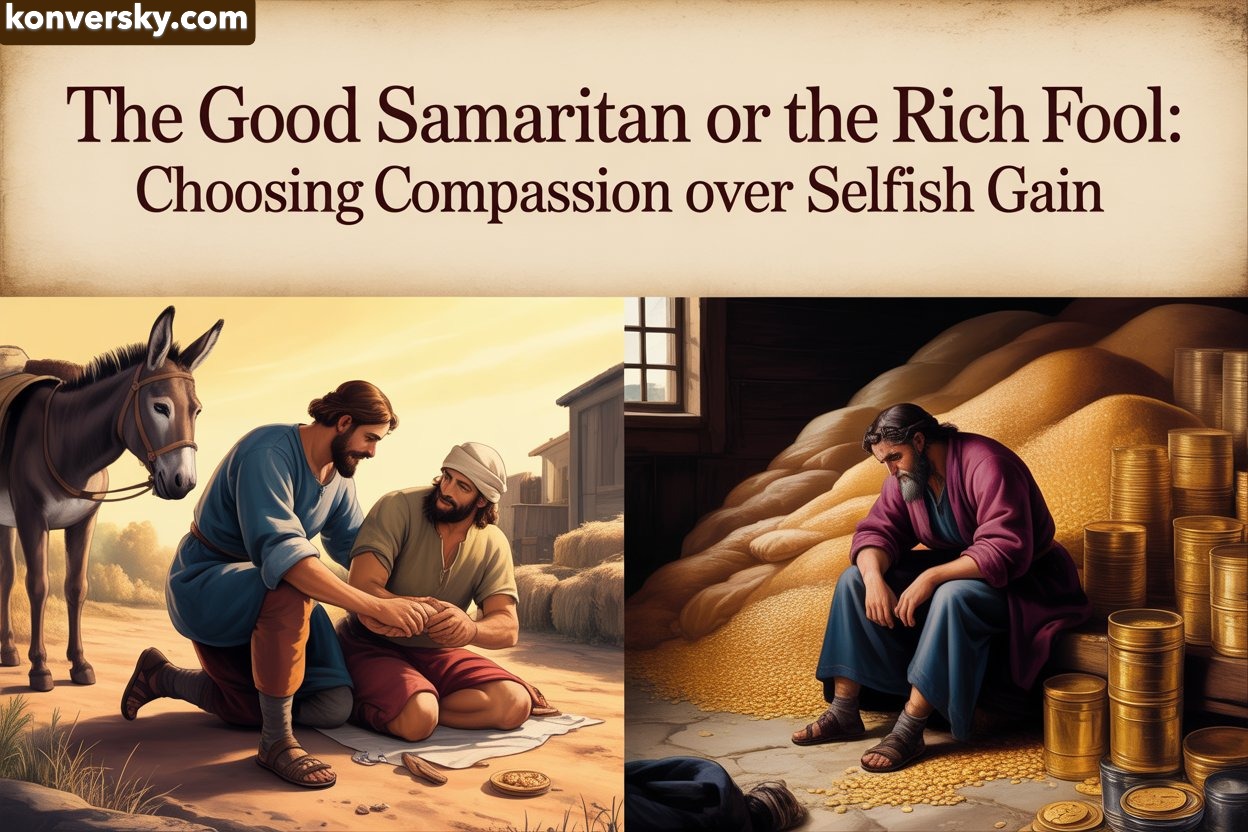
Introduction
Parables have long been powerful tools for teaching moral lessons. They simplify deep truths through relatable stories, helping readers understand right from wrong in ways that feel personal and meaningful. These short tales invite reflection on our choices, values, and how our actions affect others in everyday life.
Among the most memorable examples is The Good Samaritan or the Rich Fool, two parables that offer strikingly different perspectives on human behavior. One parable highlights compassion, generosity, and empathy; the other warns against greed, pride, and selfish ambition. Together, they show how moral choices shape individuals and influence entire communities.
By reflecting on The Good Samaritan or the Rich Fool, readers discover lessons that remain relevant in every era. These stories remind us that true fulfillment comes from kindness and connection—not wealth or self-interest.
The Story of the Good Samaritan
A man, journeying on a perilous road, was ambushed by robbers. They stole his belongings and left him injured by the roadside. Many people passed by, ignoring his suffering and need for help. Some people attended to their own concerns, and others hesitated, fearing involvement or delay.
He saw the man and felt immediate compassion. He immediately cleaned and dressed the wounds and carried him to safety. The Samaritan even paid for his care and ensured he recovered fully. His actions went far beyond what was required or expected, making The Good Samaritan or the Rich Fool a clear contrast between compassion and greed.
This parable teaches a timeless lesson. The Good Samaritan or the Rich Fool reminds readers that true kindness seeks no reward and that generosity defines genuine humanity. Helping others, even strangers, builds empathy and moral strength. The Good Samaritan or the Rich Fool shows how compassion creates lasting change, inspiring others to act with mercy and care. The Good Samaritan and The Rich Fool teach us that even small acts of kindness can have a big impact on people and society.
The Story of the Rich Fool
A wealthy man enjoyed a very large harvest one year. He thought only about himself and how to store his wealth safely. To hold more crops, he built bigger barns and focused entirely on accumulation. Many people around him had needs, yet he ignored them completely.
His life revolved around possessions, comfort, and personal gain. He believed wealth alone could bring security and happiness. The man became blind to kindness, generosity, and empathy, valuing money over human connection.
This parable teaches a lasting moral lesson. True wealth is measured by generosity, not possessions. Wealth hoarded in selfishness isolates, yet wealth shared with others brings fulfillment and unity.
The story teaches us to cherish compassion over greed and to always extend a helping hand. It encourages reflection on what truly matters in life and inspires us to avoid self-centered choices. Real fulfillment comes from meaningful connections and using resources to benefit others.
Key Differences Between the Two Parables
The Good Samaritan and the Rich Fool show very different attitudes toward others. The Samaritan notices a stranger in need and responds with care. The Rich Fool focuses solely on his own gain, forgetting the people around him. His actions reflect selfishness and short-sighted thinking, prioritizing material wealth over human relationships.
The outcomes of their choices are strikingly different. Compassion leads to healing, gratitude, and stronger human connections. Selfishness brings isolation, emptiness, and a lack of true fulfillment. One story unites, the other divides—trapped in wealth and pride.
Each parable teaches a distinct life lesson. The Good Samaritan encourages empathy, generosity, and active kindness in daily life. The Rich Fool warns against greed, hoarding, and valuing possessions over people.
Together, these stories help readers understand how choices shape character, influence communities, and create meaningful impact in the world. They remind us that the small decisions we make each day define the life we build.
Applying These Lessons Today
The Good Samaritan shows us how small acts of kindness can have a big impact. Helping strangers, neighbors, or coworkers strengthens communities. Even simple gestures, like offering support, listening, or checking on someone, reflect genuine compassion and care. These acts inspire others to follow suit, creating a ripple effect of generosity.
The Rich Fool, by contrast, illustrates the dangers of being selfish and greedy. Focusing only on wealth or personal gain can harm relationships and create isolation. Ignoring the needs of others brings emptiness, no matter how great material success may seem. His story reminds us that security and happiness are not guaranteed by possessions alone.
These parables can guide daily actions. Volunteering at shelters, donating to charity, or helping someone in need are practical examples. Even small acts—like sharing a meal, mentoring, or helping a colleague—demonstrate empathy.
By choosing generosity over self-interest, we can avoid the pitfalls of selfishness and build a more caring, connected world for everyone. Regular acts of kindness create a culture of trust and cooperation that benefits society as a whole.
Compassion vs. Selfish Gain: A Modern Perspective
Compassion plays a vital role in building strong relationships and supportive communities. Helping others creates trust, understanding, and a sense of belonging. Small acts of kindness inspire cooperation and strengthen social bonds. Showing compassion can relieve stress, enhance mental well-being, and strengthen emotional resilience for everyone involved.
Acting selfishly may cut people off from others and hinder their growth. Focusing only on oneself weakens relationships and reduces opportunities to learn from others. Acting out of greed or self-interest frequently results in stress, loneliness, and a diminished sense of life satisfaction.
Research supports the benefits of compassionate behavior. Studies show volunteering or helping others improves mental health and increases life satisfaction. Communities with generous members tend to be safer, healthier, and more resilient. Empathy first, selfishness last—this choice benefits everyone.
By practicing kindness in everyday life, people can foster stronger connections, improve well-being, and create a positive impact in their world. Compassion is not just moral—it is practical and transformative.
Conclusion
The Good Samaritan shows the power of helping others with kindness and empathy. Small acts of care can have lasting effects on individuals and communities. This parable highlights how selfless actions build trust and strengthen human connections.
The Rich Fool, by contrast, teaches the dangers of focusing solely on money and personal gain. Hoarding possessions and ignoring others’ needs leads to emptiness and isolation. His story reminds us that material success alone does not bring true happiness or fulfillment.
Reflecting on both parables teaches a valuable lesson. Choosing compassion over selfishness improves relationships, fosters community, and creates a meaningful life. Every decision to help others, no matter how small, matters. Today, will you choose the way of compassion or the road of self-interest? The answer lies in your daily actions, choices, and the values you embrace.
Optional SEO Boosters
The Relevance of the Good Samaritan: It offers enduring lessons on compassion and understanding. Helping others strengthens communities. Even small acts of care can inspire trust and hope. His story reminds us that compassion remains relevant today and continues to guide moral decision-making.
Lessons from the Rich Fool for Today’s World The Rich Fool warns against greed and self-centered thinking. Focusing only on wealth can isolate people. Ignoring others’ needs reduces happiness and limits growth. His story encourages reflection on priorities, values, and the impact of our choices on others.
How Compassion Transforms Lives Acts of kindness create positive change in relationships and communities. Volunteering, helping strangers, or supporting loved ones improves well-being. Compassion fosters connection, trust, and satisfaction. Choosing empathy over selfishness leads to a richer, more meaningful life and spreads positivity that can inspire generations.